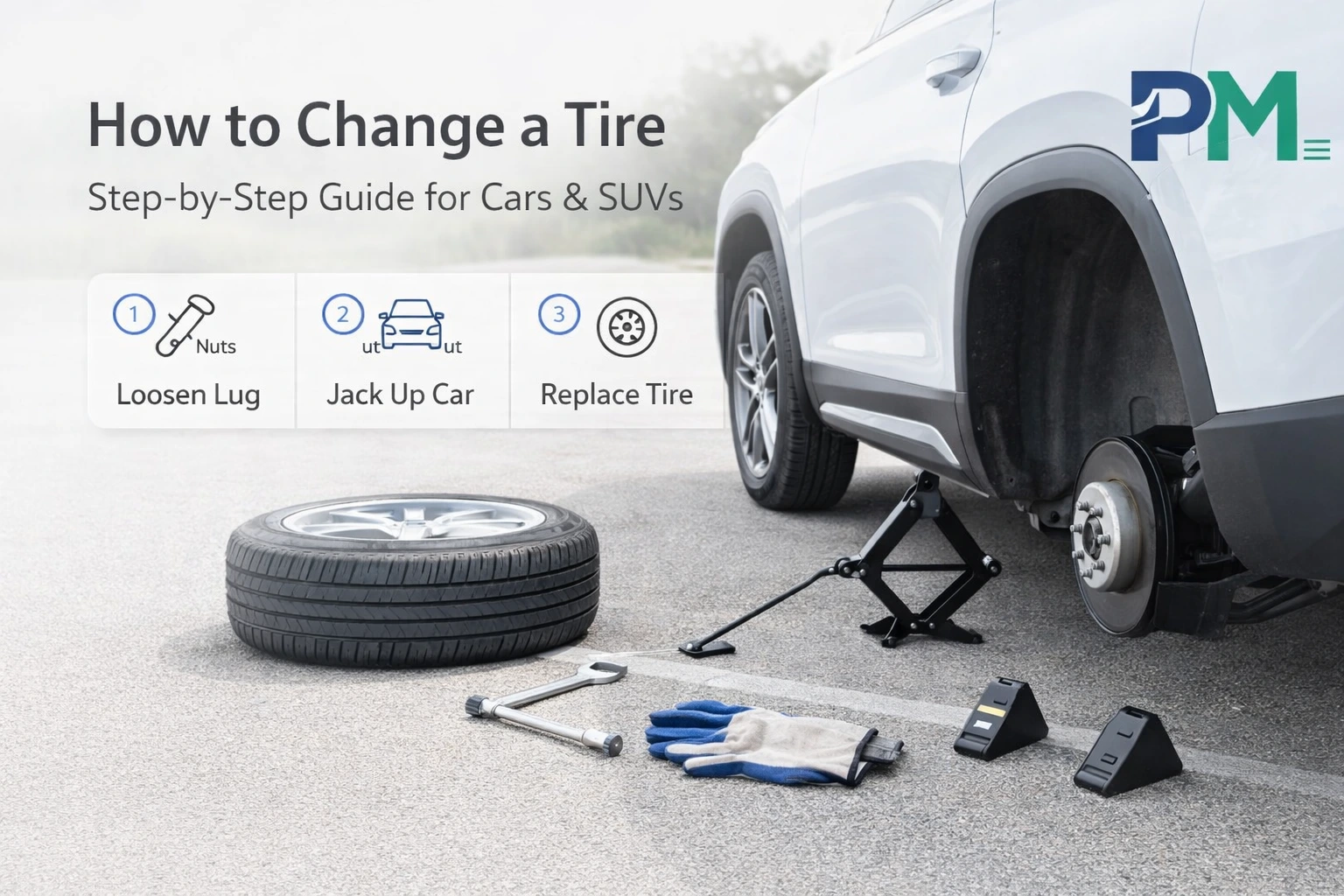
Changing a tire is one of those essential life skills every vehicle owner should know. Whether you’re dealing with a sudden flat on the highway or adjusting a wheel at home on your bike, knowing how the process works can save you time, money, and stress. In this comprehensive article, we’ll explain how to change a tire in various situations — on cars, bicycles, motorcycles, lawn mowers, and trailers — with clear, step‑by‑step instructions and practical tips that help you act confidently when it matters most.
By the end, you’ll know how to change a flat tire, how long it typically takes, what tools you need, and how professionals handle different tire types. We’ll also answer common questions like how much it costs to change a tire and whether you can do it without a jack.
Let’s get started.
Why You Should Know How to Change a Tire
A flat tire can happen to anyone, anywhere — a nail puncture, a pothole, or general wear and tear can leave you stranded. While roadside assistance and tire services are more accessible than ever, relying on them every time isn’t efficient or economical. Learning how to change a flat tire on a car or other vehicle empowers you with independence and safety.
Here’s why this skill matters:
- You control the situation instead of waiting for help.
- You save on labor costs that come with tire services.
- It reduces vehicle downtime during urgent travel.
If you’re interested in broader maintenance skills that boost driver confidence, check out this detailed vehicle care article we published:
Do the Driving Modes in the Cadillac Lyriq Offer Different Ranges or Battery Usages?
How Long Does It Take to Change a Tire?
One of the most common questions people ask is how long it takes to change a tire. The answer varies depending on experience and the type of vehicle.
Here’s a general range:
| Situation | Typical Time to Change |
|---|---|
| How to change a tire on a car (first time) | 30–45 minutes |
| How to change a flat tire on a car (experienced) | 15–20 minutes |
| How to change a bike tire | 5–15 minutes |
| How to change a mountain bike tire | 10–20 minutes |
| How to change a motorcycle tire | 30–60 minutes |
| How to change a trailer tire | 25–45 minutes |
| How to change a lawn mower tire | 20–40 minutes |
Most drivers can perform a standard car tire change in under 30 minutes with practice, but first attempts tend to take a bit longer. Don’t worry — we’ll walk you through every step so you feel confident the first time.
Tools You’ll Need Before You Change a Tire
Before attempting to change a tire, gather the necessary tools. Different vehicles require different equipment, but the basics are similar:
For Cars:
- Spare tire (check inflation)
- Jack (scissor jack or hydraulic)
- Lug wrench
- Wheel chocks or large stones
- Flashlight (if it’s dark)
- Gloves and kneeling pad (optional)
For Bikes & Motorcycles:
- Tire levers
- Pump or CO2 inflator
- Patch kit or spare tube
- Wrench for axle nuts
For Lawn Mowers & Small Units:
- Appropriate wrench set
- Jack or ramps
- Replacement tire or tube
Having these tools ready not only speeds up the process but also ensures you’re not caught unprepared when time is critical.
How to Change a Car Tire (Step by Step)
Let’s start with the most common scenario: learning how to change a tire on a car.
Step 1: Stop Safely
If you feel a flat, immediately:
- Slow down gradually
- Turn on your hazard lights
- Pull over to a flat, stable surface
Do not attempt to change a tire on a busy road or uneven ground. A safe location away from traffic reduces risk and gives you space to work.
Step 2: Secure the Vehicle
Before you begin:
- Engage the parking brake
- Place wheel chocks behind the opposite wheels
This stops the car from rolling while you work.
Step 3: Loosen the Lug Nuts
Using your lug wrench:
- Turn the nuts counterclockwise to break initial resistance
- Do not remove them completely yet
Loosening nuts while the tire still touches the ground keeps the wheel stable.
Step 4: Position and Raise the Jack
Locate the reinforced jack point near the flat tire (your owner’s manual can help). Raise the vehicle until the tire is about 6 inches off the ground.
If you’re wondering how to change a tire without a jack, know that for cars, a jack is essential to lift the vehicle safely to allow wheel removal. Alternative methods (like ramps or blocks) are less safe and not recommended.
Step 5: Remove the Lug Nuts and Tire
Now the car is elevated:
- Remove all lug nuts
- Pull the flat tire straight off
If the tire seems stuck, gently rock it back and forth until it loosens.
Step 6: Mount the Spare Tire
Slide the spare onto the wheel studs and screw the lug nuts on by hand. Tighten them in a crisscross pattern to ensure the wheel is seated evenly.
Step 7: Lower the Vehicle and Tighten
Lower the car fully and use the lug wrench to tighten the lug nuts as much as possible. Proper tightening prevents wheel wobble or loosening while driving.
Step 8: Final Checks
Before driving away:
- Ensure lug nuts are secure
- Check spare tire pressure
- Store tools and flat tire safely
If your spare is a compact temporary tire, drive cautiously and replace it with a standard tire sooner rather than later.
How Much Does It Cost to Change a Tire?
One of the biggest concerns for drivers is how much it costs to change a tire, especially at a shop or tire center. Here’s a breakdown of typical expenses:
- DIY tire change (at home): $0 (if you already have the tools)
- Auto shop or tire center service: $15–$50 (labor only)
- New tire purchase: $50–$300+ per tire (depending on brand and size)
- Mounting and balancing at a national chain (e.g., how much does Walmart charge to change a tire): typically between $15 and $40, varying by location
Prices fluctuate based on region and tire type, so it’s best to call ahead or check online for exact rates.
Additional Tire Change Scenarios
Tires aren’t limited to cars. Let’s explore tire changes on other vehicles:
How to Change a Flat Tire on a Bicycle
Bicycles present a simple case, but they still follow a logical process:
- Tools Required
- Tire levers
- Pump or CO2 inflator
Patch kit or spare tube
Steps
- Remove the wheel from the bike frame
- Use tire levers to unseat the tire bead
- Take out the old tube
- Inspect for debris
- Insert new tube or patch
- Inflate to proper pressure
- Reinstall wheel
This covers how to change a bike tire, how to change a rear bike tire, and how to change a tubeless bike tire if your bike uses that system.
How to Change a Mountain Bike or Road Bike Tire
Mountain and road bikes differ mainly in tire width and pressure:
- Mountain bikes use wider, lower‑pressure tires
- Road bikes use narrower, high‑pressure tires
The steps remain the same; just ensure you have the correct tube size for your specific tire.
How to Change a Motorcycle Tire
Motorcycle tires require more advanced tools and often professional help, but it’s possible with the right equipment.
Steps typically include:
- Removing the wheel from the bike
- Breaking bead seal with a bead breaker tool
- Using tire irons to unseat old tire
- Mounting new tire and ensuring proper balancing
Because motorcycles balance differently than cars, ensuring precision is crucial for safe riding.
How to Change a Lawn Mower Tire
Lawn mower and riding mower tires are similar to other pneumatic tires but smaller.
Steps include:
- Turn off the mower and remove spark plug for safety
- Elevate mower using stable blocks
- Remove tire axle nuts
- Replace tire or tube
- Reassemble
This applies to how to change a front tire on a riding lawn mower and how to change a rear tire on a riding lawn mower.
How to Change a Trailer Tire
Trailer tires are similar to car tires but often heavier and exposed to different loads.
To change:
- Secure trailer with wheel blocks
- Use a heavy‑duty jack or blocks
- Follow similar lug nut loosening and spare mounting steps
How to Change a Tire on a Truck
Trucks usually have larger, heavier wheels. Professional tools like an impact wrench or heavy‑duty jack help make the job easier. Always follow the manufacturer’s guidelines.
Special Tire‑Related Tasks
Beyond basic tire changes, drivers and riders often need to address related issues:
How to Change a Tire Valve Stem
Valve stems can wear out and cause slow leaks. Replacing them often requires:
- Removing tire from the rim
- Removing old valve
- Installing new valve with proper lubrication
This task is usually performed at a tire shop due to specialized tools.
How to Jack Up a Car for Tire Change
Knowing proper jack placement is critical. Consult your owner’s manual for reinforced jack points and always use a jack with the correct load rating.
Common Tire Questions Answered
How long does it take to change a flat tire at a shop?
Tire shops typically complete the job within 20–40 minutes.
Can I change a tire without a jack?
For cars, using a jack is essential for safe elevation. For bikes or small units, you can remove wheels without a jack.
How much does it cost to change a flat tire?
Labor typically ranges from $15 to $50; tire cost varies widely based on size and brand.
Tips to Make Tire Changing Easier
- Check your spare tire pressure monthly
- Know where tools are stored in your vehicle
- Use wheel blocks before lifting
- Practice tire removal in a safe environment
Final Thoughts
Learning how to change a tire is practical and empowering. Whether you’re dealing with a flat tire on a car, swapping a bike tire tube, replacing a motorcycle tire, or adjusting a lawn mower wheel, the basic skills remain the same: prepare, elevate, remove, replace, and secure.
By mastering these steps, you reduce downtime, increase travel safety, and gain confidence on the road or trail.